

Olliers Solicitors
Criminal law,
explained on air
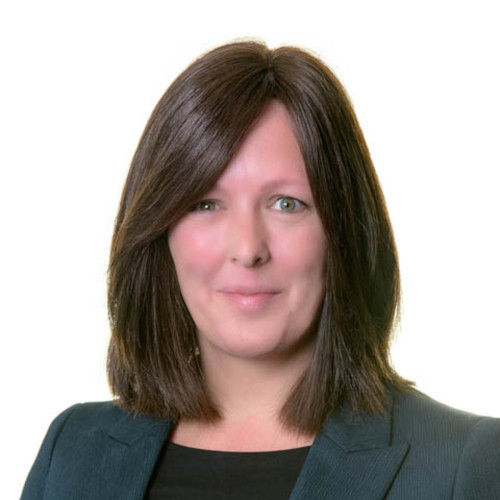
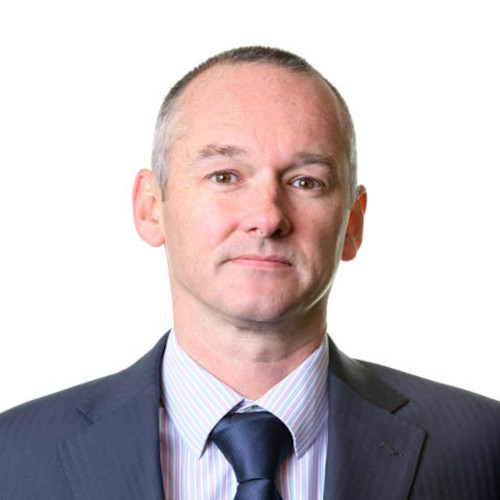
Broadcasters and national newspapers turn to Olliers Solicitors to explain criminal law. In 2026 two of the firm's lawyers made seven broadcast appearances: Matthew Claughton, Managing Director, on BBC Radio 5 Live, LBC News, BBC News twice, BBC Sounds and the Legally Speaking Podcast, and Laura Baumanis, Partner, on Get Legally Speaking. The questions they were asked are below, with a short answer to each. Journalists and producers working on a story can contact press@olliers.com.
- Appearances
- Seven in 2026
- Broadcasters
- BBC Radio 5 Live, BBC News, BBC Sounds, LBC News, Legally Speaking, Get Legally Speaking
- Firm
- Olliers Solicitors, Manchester and London
- Contributors
- Matthew Claughton, Managing Director · Laura Baumanis, Partner
Nobody here chose what to be asked
Each of the questions below was put by a journalist who had decided it was what the public needed explaining, and each had to be answered live, in plain English, with no opportunity to redraft.
They are a good guide to what people want to know when a criminal investigation touches their life. Each is answered here briefly, with a link to the full discussion and to the broadcaster's own recording where one is publicly available.
BBC Radio 5 Live
9 November 2026
Live radio, Drive
How is a ten and a half year sentence built?
Asked on BBC Radio 5 Live Drive by Clare McDonnell and Chris Warburton
Step by step, and not by picking a figure. The court starts with the most serious offence, places it in a category of the sentencing guideline by assessing harm and culpability, takes that category's starting point, adjusts it for aggravating and mitigating features, then decides whether the remaining offences run alongside it or after it. Moving an offence one category down changed the starting point from twelve years to eight, a larger swing than the mitigation achieved.
The same interview covers how much of a sentence is served in custody, what licence conditions and notification requirements involve afterwards, and why a conviction of this kind restricts travel for years. The full breakdown is set out on this site.
LBC News
9 November 2026
Live radio
How does a judge decide the length of a sentence?
Asked live on LBC News by Simon Conway
By working through a structure rather than reaching for a figure. The judge assesses the harm the offence caused and the culpability of the person who committed it, places the case within the relevant sentencing guideline on that basis, and follows the route the guideline sets out to a starting point, which is then adjusted for aggravating and mitigating features. Two cases that sound similar in a headline can sit in different categories once harm and culpability are assessed properly.
How much of a sentence is served in custody is a separate question from its length, and it depends on the offence and the term imposed. For most determinate sentences release comes at the halfway point, but for the most serious sexual and violent offences it is two thirds. Nor is a sentence appealable simply because it is longer than the defendant hoped: the Court of Appeal is asked whether it is manifestly excessive or wrong in principle, which is a materially higher test.
What Matthew said on air, in his own words
Asked how a judge would arrive at the sentence in a case then before the court:
“The judge is going to have to look at harm and culpability for the offence, use guidelines, and follow a route to a decision … He could make slightly different decisions about the level of harm caused and the level of culpability of the defendant.”
On how much of a sentence is served:
“Of that, a defendant would serve two thirds.”
Short extracts of Matthew Claughton’s own answers, quoted from the LBC News interview of 9 November 2026.
Broadcast live on LBC News and not available on demand.
BBC News
9 November 2026
Live television
How is the sentence for a rape conviction arrived at?
Asked live on the BBC News channel by Adina Campbell
The maximum sentence for rape is life imprisonment, and in practice sentences expressed in years run between roughly four and nineteen. Where a particular case falls is not a matter of impression. The court works through the sentencing guideline, assessing the harm caused to the complainant and the culpability of the defendant, and those two assessments place the offence in a category.
The category is what produces the numbers. The most serious category carries a starting point of twelve years with a range of ten to fifteen. The category below it starts at eight years with a range of seven to nine. That is why prosecution and defence argue so hard over which category an offence belongs in: the argument is worth several years before any mitigation is considered. Following a conviction there is a limit to how much mitigation can realistically be advanced, which is why the categorisation carries so much of the weight.
Broadcast live on the BBC News channel and not available on demand.
BBC News
5 November 2026
Live television
What happens after a jury returns its verdict?
Asked live on the BBC News channel by Matthew Amroliwala
A verdict is not the end of the case. On a conviction the court turns to sentence, which is very often adjourned so that reports can be prepared, and the judge may indicate the range being considered in the meantime. On an acquittal the defendant is free to go, and cannot be tried again for the same offence other than in narrow circumstances set out by statute.
The gap between verdict and sentence is frequently the point at which families understand least about what is happening, and it is also the point at which what is said publicly matters most.
What Matthew said on air, in his own words
On whether the passage of time makes a difference:
“There’s no time limit on justice in our court system, and that’s the end of the matter. I know some countries have limits, but not the UK and not England and Wales.”
On how the judge would approach the sentence:
“What the judge will do, he’ll look at issues of culpability, which is seriousness, and the level of harm caused to the victim in relation to each of the offences … he’ll give some consideration to the issue of consecutive, albeit shorter, sentences in relation to the other offences. And he’ll also keep an eye on totality. The total sentence will have to be fair.”
Short extracts of Matthew Claughton’s own answers, quoted from the BBC News interview of 5 November 2026.
Broadcast live on the BBC News channel and not available on demand.
BBC Sounds
8 October 2026
Podcast
Why does the date of an alleged offence decide the charge?
Asked on BBC Sounds by Anoushka Mutanda-Dougherty. Matthew Claughton answered alongside Stephen Davies
Because an allegation is prosecuted under the law in force when the offence is said to have happened, not the law in force now. Where an allegation goes back decades, the charge itself, the defences available and sometimes the maximum sentence are all taken from legislation that has since been replaced. Two people accused of the same conduct in different years can therefore face materially different cases.
The same episode covers what happens if a defendant chooses not to give evidence, how special measures work for a complainant, and what a jury may and may not take into account. Those answers are set out in full on this site.
Legally Speaking Podcast
August 2026
Podcast, S10E30
Can a criminal charge be stopped before it is ever brought?
Asked on the Legally Speaking Podcast by Robert Hanna
Often, yes, and it is the part of the work the firm is proudest of. Pre-charge engagement means representing someone from the investigation onwards rather than only at the police interview: testing the weaknesses in the case, directing lines of enquiry, putting forward material that points away from guilt, and ending in written representations that the charging standard in the Code for Crown Prosecutors is not met. When that succeeds, there is no charge, no court and nothing on the record.
The same conversation covers how the firm matches a client to a lawyer on temperament as well as specialism, why it stayed independent, and how it trains people coming into criminal defence. The full interview and an edited transcript are published here.
Get Legally Speaking
2026
Podcast
Do I need a solicitor if I have done nothing wrong?
Asked on Get Legally Speaking by Hatti Suvari, answered by Laura Baumanis, Partner at Olliers
That is one of the most important times to have one. People assume a lawyer is for court, but the damage is usually done long before that, at the police interview, in the first account someone gives. Say the wrong thing without advice and you can admit to an offence the police could not otherwise have charged. Say nothing when you have a good defence and witnesses who could help, and that can be the very thing that gets you charged.
At the police station you are entitled to legal advice whether you pay for it or use the duty solicitor, and asking for one does not keep you there any longer. The same conversation covers social media, indecent images and young people, joint enterprise, and why so much of what Google returns turns out to be American law.
Recognised by the directories, asked by the press
Crime Lawyer of the Year
Awarded to Matthew Claughton at the Legal 500 Northern Powerhouse Awards. He is listed as a Leading Partner in the Legal 500, where the firm's criminal work has been reviewed in ten consecutive editions.
Asked to explain the law
- A clerical error at the DVLA left an innocent man arrested and disqualified Daily Mail · GB News · Daily Express · Manchester Evening News · This is Money
- Why autistic and neurodivergent people face greater risk in police custody Yahoo News · SEN Magazine · and ten regional titles
- Why football banning orders need rethinking Law Society Gazette · Solicitors Journal · Daily Star
- What actually happens after a high profile arrest Daily Mail, in print and online · Daily Star · UNILAD
- The offence most people do not know they commit on an aircraft The Daily Telegraph · Yahoo News
- Keeping neurodivergent young people out of the criminal justice system Solicitors Journal · Yahoo News · Wigan Observer · and regional press
Selected coverage from 2026.
Olliers Solicitors is a specialist criminal defence firm with offices in Manchester and London, and around thirty solicitors across serious crime, fraud, sexual offences and pre-charge work.
Working on a story?
Olliers fields a specialist in the relevant area rather than a single spokesperson. Matthew Claughton, Managing Director, takes most broadcast requests, and solicitors across the firm's practice areas comment in their own. Comment, interview and background briefing are all available, including at short notice on a breaking story.
Subjects
Pre-charge investigations, serious crime and homicide, fraud and financial crime, sexual offence allegations, motoring, regulatory and professional discipline, and young people in the criminal justice system. Each has a specialist who can speak to it
Formats
Live television and radio, recorded podcast and video, written comment and background briefing. Manchester and London
Contact
Can Olliers comment at short notice on a breaking story?
Yes. Matthew Claughton gave live legal reaction on the BBC News channel on the afternoon a Crown Court verdict was returned, and was on LBC News at a quarter to seven the following Monday morning ahead of the sentencing hearing. Same-day and same-hour requests are normal rather than exceptional.
Can Matthew Claughton appear live, rather than pre-recorded?
Yes. He has appeared live on the BBC News channel twice and live on LBC News, as well as in recorded podcast and video formats. Live broadcast is the format most commentators cannot do, and it is one Olliers is used to.
Can an interview be done remotely?
Yes. Interviews can be done down the line, by video link or in a studio, from Manchester or London. A London bulletin does not need to fly anyone anywhere to book a Manchester criminal defence solicitor.
What areas of criminal law can Olliers speak on?
Pre-charge investigations and how charges are prevented, serious crime and homicide, fraud, sexual offence allegations including historic allegations, motoring offences, football banning orders, and young people and neurodivergence in the criminal justice system. The firm has given comment on all of these to national press and broadcast during 2026.
Who is the press contact at Olliers Solicitors?
Press and interview enquiries go to press@olliers.com.
Preferred credit
Name, role, of Olliers Solicitors
For example, Matthew Claughton, Managing Director of Olliers Solicitors, or Laura Baumanis, Partner at Olliers Solicitors. Whoever speaks, the firm's name is the part worth including, in the introduction and in the episode or article description.


Complete the form below and we will contact you
Manchester
Head Office
- 0161 8341515
- info@olliers.com
- Fourth Floor, 44 Peter Street, Manchester, M2 5GP