Explained on BBC News
Historic sexual offence allegations: how the charges and the trial work
Why the date of an alleged offence decides what you are charged with, what happens if you do not give evidence, and what a court can do to protect a witness.
Matthew Claughton, Managing Director of Olliers Solicitors, was asked by the BBC to explain how these cases work, alongside fellow criminal defence lawyer Stephen Davies.

What he was asked
The questions, and what Matthew said
Seven questions from the broadcast, in his own words, lightly edited for reading. Each one opens the BBC's recording at that moment.
What charges can a historic sexual offence case involve?
The difference between the charges is date dependent. Indecent assault is the offence that would have been committed by anyone prior to the 2003 Sexual Offences Act, which came into force on the 1st of May 2004. Offences after the 1st of May 2004 would be charged as sexual assault.
▶ Play from 2:14What is indecent assault, and why is it not charged any more?
The reason it is unfamiliar terminology is because it is historic, and it is not charged any more for a modern offence. It is an assault or unwanted touching that is indecent in nature and that was intentional. It is unwanted, there was no consent.
▶ Play from 3:11Can a jury hold it against you if you do not give evidence?
This is something that starts at the police station. At the police station, the caution goes something like this: you do not have to say anything, it may harm your defence if you fail to mention something that you later rely on in court. So that is an inference.
It is similar in the Crown Court. When it is their turn to give evidence, their time, and they choose not to, that is the point at which the judge may say, do you realise that this is something that could be brought to the attention of the jury at the conclusion of the case? It is quite an obvious point. Would they not have wanted to defend themselves, to explain the situation?
It will be dealt with in more technical terms in the course of a trial, and it will vary from trial to trial. In a case where the evidence is so weak that the defendant need not put forward any explanation, that is an entirely legitimate strategy.
▶ Play from 7:38What does a solicitor tell a client before they give evidence?
You are going to be saying to your client, keep it simple, stick to the questions that are asked of you. Do not get angry in cross examination, do not attack complainants unnecessarily.
You have to rein your client in. You do not coach them, but you have to rein them in and you have to get them to stick to the facts. Do not get carried away, do not get into an altercation with the barrister that is cross examining you, because they may try and goad you into saying a lot more and behaving in a certain way that would be favourable to the prosecution case and negative for you.
▶ Play from 9:47How does bad character evidence get admitted?
I am the most honest person you could ever meet. Wait a minute, were you not convicted of shoplifting last week? That is the kind of thing. That is how bad character comes in, and that is a simple example of it. So you have got to be very careful about assertions that you make.
▶ Play from 11:07What are special measures, and can a witness give evidence behind a screen?
You are talking about what the system would call special measures. The most popular special measure is giving evidence behind a screen. You have to imagine the courtroom: there is a screen that shields a witness from the defendant and from the public gallery, but they can see the judge, they can see the jury, and they can see the barristers who are asking questions of them. Sometimes the barrister may have to move, because the geography and the layout of the courtroom is such that they have to move around the corner a bit so that this can actually take place.
Sometimes I have had cases where a complainant has said, no way, I want to look at him as I am giving evidence. And that is not a criticism of those who do use screens. But I have had cases where that is precisely what they wanted to do. They wanted to talk to the jury, they wanted to answer the questions, but they also wanted to look at the person against whom the allegation was being made.
▶ Play from 11:44What are the maximum sentences for these offences?
The maximum sentence for rape is life imprisonment, but it is normally expressed in a determinate term of years. The maximum sentence for sexual assault is ten years' imprisonment, but frequently sentences of substantially less are imposed. And the old offence of indecent assault carried a maximum sentence of two years.
But then you are moving into issues of concurrent and consecutive sentences and the issue of totality. So it is a really, really complicated area.
Read the rest of the conversation
Can lawyers check a juror's social media before a trial?
No, there would not be scope for that. But an individual who had an interest may want to draw that to the attention of the court. That is not something that would be specifically addressed at the beginning of the case.
What is a jury told at the end of each day?
At the end of every court session, the judge will tell them not to discuss the case with anybody outside of their number, in other words not to deliberate with anybody other than their fellow jurors, not to do research, and to stay well away from social media. That is made very clear in every criminal case.
Which of course is going to be so difficult, because it is not active research. A lot of people are prisoners of their algorithms and they might just go for a scroll on their phone when they are bored. And what crops up, something as newsworthy as this, could crop up inadvertently. It is going to be very, very difficult for the jury to comply with what is said by the judge, and they will have to work so hard at achieving that. It is not uncommon for jurors to be in trouble for crossing this line.
Can a UK court do anything about commentary posted abroad?
It is an absolute nightmare. I think it is going to be very, very difficult, and I think the judge is going to have to rely on what he says to the jury rather than what happens in relation to these external influencers. Reaching out to an external influencer in another country is going to be nigh on impossible.
Can a defendant be in contempt for posting about their own trial?
I think that would almost be the worst kind of contempt. So yes, they could be held in contempt. It is not something that I have ever come across. And the consequences could be very serious for a defendant who started to do streaming about a case that they were involved in. There is every chance that that individual would end up having their bail revoked. And that would be a surefire way of ensuring there were no more broadcasts.
What order does a Crown Court trial actually run in?
Once you have got the jury, the indictment will be read again and then the prosecution opening, and then evidence will be called. But it will not necessarily be on day one, it is more likely to be a subsequent day. The prosecution open and then they call their evidence. The defence do not make an opening statement. That comes at the close, to the end.
How does an English criminal trial differ from an American one?
One of the key things for the trial process is that the defendant sits with his legal team in the States, whereas in England and Wales he is in the dock. And I think that is unfair because it sort of makes them look guilty. So I think the States deal with that far better than we do.
You will also notice that in England and Wales, barristers sit at their seats and they stand up when they address the court, whereas from what we see in the States, they tend to have a bit of a licence to roam around the courtroom.
And cameras throughout proceedings: in criminal cases in the UK, proceedings will not be televised, except rare cases where the court agrees to televise sentencing. Very rare clips where it is in the public interest for the judge's sentencing remarks and sentencing to be televised. But there is no showbiz there. It is normally very, very straightforward and formal.
Is an English courtroom as theatrical as an American one?
The theatre starts and ends with the wigs and the gowns. After that, it is pretty formal. Huge levels of respect for the system, not a huge amount of humour. And from what I have seen of what goes on in the States, it is worlds away.
Going further
Three things there was no time to say
Broadcast answers are ninety seconds long and run on somebody else's agenda. These are the points Matthew would expand on.
One. Why the 1st of May 2004 boundary matters in practice rather than in theory, and what it changes about how a defence is prepared.
Two. What a client should expect in the days between being told the police want to speak to them and the interview itself.
Three. The dock. He said on air that he thinks it is unfair because it makes a defendant look guilty. That is a view held by a solicitor of nearly forty years and it deserves more than one sentence.
Who explained this
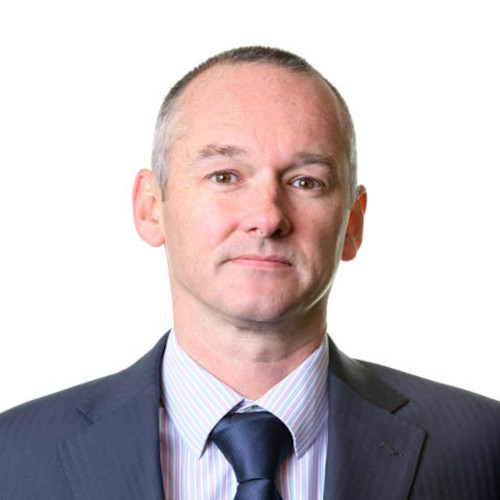
Managing Director, Olliers Solicitors
Matthew Claughton
A criminal defence solicitor since the late 1980s, and the person who takes most first calls on an investigation that has not yet reached a charging decision.
- Pre-charge representations in fraud, serious crime and sexual offence investigations
- Attends police interviews personally, in Manchester and London
- Asked by the BBC to explain criminal law and procedure
- Has spoken on the Legally Speaking Podcast with Robert Hanna about the firm's approach to pre-charge work
If this is your situation
- The police want to speak to meWhat happens before any decision to charge is taken.↗
- I am under investigation for a sexual offenceThe department that handles these cases, and who would act.↗
- Can a charge be prevented?Representations made before the charging decision.↗
Source, and what this page is
The words are Matthew's. Everything quoted on this page is what Matthew Claughton said on the programme, lightly edited for reading. The questions have been rewritten as the plain questions a reader would ask, rather than reproduced as the presenter put them.
The recording is the BBC's. Broadcast on BBC, Fame Under Fire: Russell Brand on Trial, presented by Anoushka Mutanda-Dougherty, 8 October 2026, with criminal defence lawyers Matthew Claughton and Stephen Davies. The recording is not reproduced here. The full episode is on the BBC's own channel: listen there. Olliers Solicitors is not affiliated with, endorsed by or acting for the BBC.
It is not advice. This is general information about the law of England and Wales, given in a broadcast discussion of a reported case. It is not advice on any individual case and should not be acted on without speaking to a solicitor about your own circumstances.