

Specialist Drunk in Charge Solicitors
Understanding the Offence of Drunk in Charge of a Motor Vehicle
Being drunk in charge of a motor vehicle is a serious offence under UK law. It is not necessary to be driving to be charged – simply being in control of a vehicle while over the legal alcohol limit can lead to prosecution.
At Olliers Solicitors, our specialist motoring defence team has over 40 years of experience successfully defending clients against motoring offences. We are committed to protecting your rights and ensuring you receive expert legal representation.
Being charged with drunk in charge of a vehicle is different from drink driving and many people don’t realise the difference until it actually happens to them. You can be prosecuted even if you weren’t driving Just being in or near your car while over the limit can lead to a conviction if the police believe you intended to drive whilst you remained in excess of the legal limit. The consequences can be serious a fine up to 10 penalty points or even a driving disqualification, plus the long-term impact on your licence and potentially on your employment. At Olliers we’ve successfully defended many clients accused of this offence It’s a defense for a person to prove that there was no likelihood of them driving the vehicle whilst the proportion of alcohol in their breath blood or urine remained over the limit. If you’re facing a charge of being drunk in charge speak to our specialist motoring team today. Early advice can make all the difference
What Does “In Charge” Mean?
There is no single legal definition of being “in charge” of a vehicle. Courts consider a range of factors, including:
- Your proximity to the vehicle
- What you were doing at the time
- Whether you had the ignition key
- Any evidence suggesting you intended to drive
Simply sitting in your car does not automatically mean you are in control of it. Each case is judged on its unique facts.
Why This Offence Exists
The offence of being drunk in charge was introduced to close a legal loophole. In many cases, police cannot prove someone was driving, especially if the vehicle was stationary when they arrived. Without this offence, many individuals could avoid prosecution due to lack of evidence of driving.
This means you can still be convicted even if you weren’t driving the vehicle.
Penalties can include:
- 10 penalty points
- A driving disqualification
- A fine, community order, or up to 12 weeks in prison
The Legal Framework
The offence is defined under Section 5(1)(b) of the Road Traffic Act 1988, which states:
“If a person is in charge of a motor vehicle on a road or other public place after consuming so much alcohol that the proportion in their breath, blood or urine exceeds the prescribed limit, they are guilty of an offence.”
The legal alcohol limit is 35 micrograms per 100 millilitres of breath.
Defending a Drunk in Charge Allegation
Statutory Defence: No Likelihood of Driving
You may have a defence if you can prove there was no likelihood of you driving while over the limit.
Section 5(1)(2) of the Road Traffic Act 1988 creates a statutory defence of there being no likelihood of driving the vehicle. This means that if you had no intention of driving the car (at all or any further) whilst over the limit, you are not guilty of being drunk in charge.
It is a defence for a person charged with an offence under subsection (1)(b) above to prove that at the time he is alleged to have committed the offence the circumstances were such that there was no likelihood of his driving the vehicle whilst the proportion of alcohol in his breath, blood or urine remained likely to exceed the prescribed limit.
There is an evidential burden on the defence to prove, on a balance of probabilities, that there was no likelihood of the defendant driving. To do this we need to present evidence to the court.
To support this defence, we may present:
- Your own testimony
- Witness statements (e.g. from a friend or family member)
- Text messages or call logs
- Evidence of a pre-booked taxi
- Expert toxicology reports estimating when your alcohol level would fall below the limit
Our team works with expert witnesses to provide clear and credible evidence to support your case.
Other Possible Defences
Even if the “no likelihood of driving” defence doesn’t apply, you may still have a case. Procedural errors by the police or issues with evidence can form the basis of a strong defence.
We will explore every angle to protect your licence and avoid a criminal conviction.
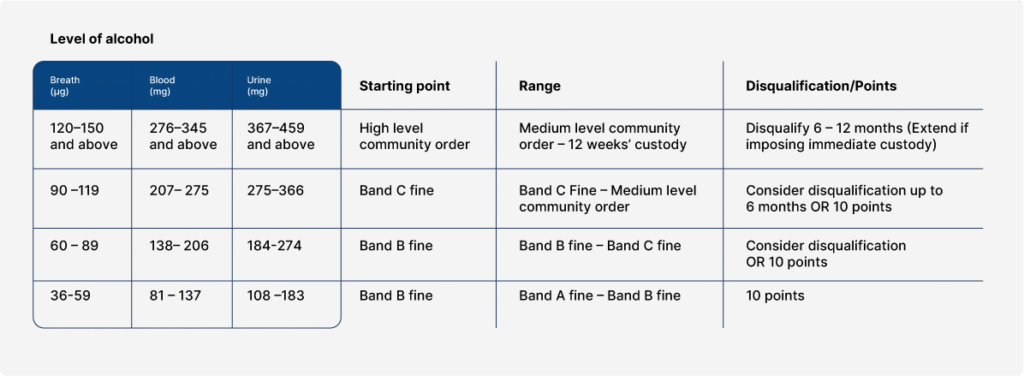
Sentencing Guidelines
If convicted, the court may impose:
- A fine, community order, or custodial sentence
- 10 penalty points or a driving ban
Sentencing depends on your alcohol reading and the specific circumstances of your case.
Some frequently asked questions
Drunk in charge is an offence under Section 4(2) of the Road Traffic Act 1988. It applies when you’re in charge of a motor vehicle on a road or public place while over the legal alcohol limit, even if you weren’t actually driving. Unlike drink driving, you don’t need to be moving or even have the engine running; simply being “in charge” of the vehicle while over the limit is enough. This offence exists to prevent people from putting themselves in a position where they might drive while intoxicated.
There’s no single legal definition and courts consider each case individually. Relevant factors include your proximity to the vehicle, whether you had the keys, whether you were in the vehicle, what you were doing at the time and any evidence suggesting you intended to drive. You don’t need to be in the driver’s seat or have the engine running. Being in the back seat with keys in your pocket could be enough. However, simply being near your car doesn’t automatically make you “in charge.”
The law provides a specific defence under Section 4(3) of the Road Traffic Act 1988: you’re not guilty if you can prove there was no likelihood of you driving while still over the limit. To succeed, you need to show that you had no intention of driving until you were sober, and the circumstances support this. Evidence might include having arranged alternative transport, having given your keys to someone else, being a significant distance from your destination, or having settled down to sleep for the night.
Potentially, yes. Sleeping in your car while over the limit can result in prosecution if police consider you were “in charge” of the vehicle. Having the keys with you, being in the driver’s seat, or having the engine running for warmth all make prosecution more likely. However, sleeping in the car may also support the statutory defence if you can show you had no intention of driving until sober and had settled down for the night.
Not automatically, but it’s relevant to the statutory defence. Getting into your car to keep warm, sleep off the alcohol or shelter from weather shows you weren’t intending to drive. But, you still need to prove there was no likelihood of you driving while over the limit. You’d need to show you had taken steps to ensure you wouldn’t drive: arranging a lift for later, putting keys out of reach and settling down to sleep properly.
Drunk in charge carries up to 3 months’ imprisonment, an unlimited fine and either 10 penalty points or a discretionary driving ban. Unlike drink driving, there’s no mandatory minimum disqualification. The court can choose to impose points instead of a ban. In practice, custody is rare for drunk in charge without aggravating factors. Most cases result in a fine and either points or a short ban.
No. Unlike drink driving, drunk in charge doesn’t carry a mandatory ban. The court can either impose 10 penalty points or a discretionary disqualification. This is one of the key differences from drink driving. However, if you already have points on your licence, 10 additional points could push you to 12 or more, triggering a totting-up disqualification. In more serious cases, the court may still choose to impose a ban rather than points.
If the statutory defence applies, ie. you can prove there was no likelihood of driving while over the limit then you should be found not guilty. Beyond the statutory defence, other challenges might include disputing whether you were actually “in charge” of the vehicle, challenging the breath or blood test procedure or arguing you weren’t in a public place. Each case depends on its specific facts, and early legal advice is important to identify viable defences.
The more you can show you had no intention of driving and had taken steps to ensure you wouldn’t, the stronger your defence. Helpful evidence includes phone records showing you booked a taxi, witness statements confirming you planned to sleep it off, evidence you gave your keys to someone else, evidence of a designated driver arrangement, and anything showing you had settled down for the night. Conversely, having the engine running or being in the driver’s seat weakens the defence.
This depends entirely on your circumstances. If the statutory defence applies, you can prove there was no likelihood of driving, you should plead not guilty and advance that defence. If you were genuinely about to drive and have no realistic defence, a guilty plea at the first opportunity attracts a sentencing discount of up to one-third. The decision has significant consequences. Always get specialist legal advice before deciding.
Contact a solicitor promptly. Drunk in charge is one of the offences where the statutory defence can genuinely succeed but only if it’s properly prepared and presented. Think carefully about what happened: why were you in the car? What were your plans for getting home? Did you tell anyone you were sleeping it off? These details matter and can make the difference between conviction and acquittal.
Why Choose Olliers Solicitors?
- Over 40 years of experience in motoring law
- Proven track record of successful defences
- Access to leading expert witnesses
- Personal strategic legal support from start to finish
Contact Olliers Today
If you’re facing a drunk in charge allegation, don’t face it alone. Contact Olliers Solicitors for expert legal advice and representation.
Contact our specialist motoring team by completing the form below, emailing info@olliers.com or telephoning 0161 8341515 (Manchester) or 020 38836790 (London).




Complete the form below and we will contact you
Manchester
Head Office
- 0161 8341515
- info@olliers.com
- Fourth Floor, 44 Peter Street, Manchester, M2 5GP