

Written 13th March 2026 by Nathalie Potter
Specialist Disclosure and Barring Service Lawyer, Nathalie Potter, considers when the Disclosure and Barring Service are able to disclose information relating to third parties on Enhanced DBS Checks.
Applying for a DBS certificate should be an easy process in pursuit of a new job or role but, for many people, the process becomes frightening and overwhelming the moment a letter arrives from the police saying they want to disclose information about someone else connected to them.
We’re hearing from more and more people who, after applying for an enhanced DBS check, are suddenly confronted with a worrying letter from the police saying they may disclose information about a family member, partner or someone connected to the individual with previous convictions, cautions or who is currently under investigation.
These situations can feel deeply distressing, especially because the concerns often relate to sensitive and serious allegations, including offences of a sexual nature. For example, we frequently see cases where a third party is being investigated for possession of indecent images of children, even if the applicant themselves has done nothing wrong.
This can feel disturbing and overwhelming – particularly for those applying for homebased roles like childminding.
Are the Disclosure and Barring Service able to disclose information that does not relate to the applicant?
In certain specific circumstances yes – disclosure relating to third parties is allowed in relation to Enhanced DBS Checks. The police follow a strict set of guidelines called the Quality Assurance Framework (QAF) which is designed to help them decide whether disclosure is justified.
One part of this framework focuses entirely on situations where a third party, someone close to the applicant, may have access to children or vulnerable adults through the applicant.
What will the police consider?
For the police to decide to include third-party information on your DBS certificate, they must genuinely believe that the third party could gain relevant access to vulnerable individuals.
They look at things like:
- whether the person is related to you
- whether they live with you or regularly visit your home
- whether the job you’ve applied for is homebased
- whether your work could realistically give someone else access to vulnerable groups
- and whether the police believe that person may pose a significant risk
These criteria can feel deeply intrusive. Many people reading these questions feel judged, anxious, or unfairly implicated in someone else’s behaviour. You may love someone, be distanced from them, or barely be in contact anymore – but the system can still put their past or present under scrutiny in the context of your application. That emotional toll can be immense.
The QAF also emphasises that any disclosure must be “meticulous and not exceed its purpose.” Knowing that offers some reassurance, but for many applicants, the fear remains very real.
When is an Enhanced DBS Check required?
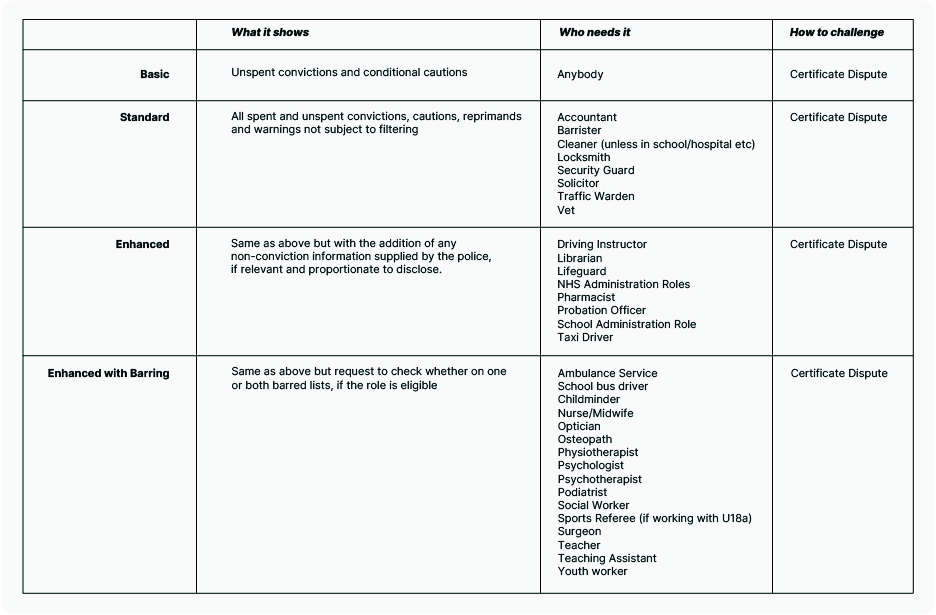
This isn’t an exhaustive list and in most cases the level of check required is dependant on the role, for example, an architect would usually only require a basic check, but, if they are working on site at a school they will require an enhanced DBS certificate, irrespective of the fact they would not be expected to have any direct contact with children and the role is not considered regulated activity.
Can I make representations that this information should not be disclosed?
Even though the police don’t legally have to offer you the chance to explain your side, you may be invited to make representations against disclosure if the following criteria has not been met:
- If it is unclear whether the position for which you are applying really does require the disclosure of such information
- Where the information may indicate a situation that is out of date or no longer true
- If you or the third party have never had a fair opportunity to answer the allegation
- If you appear unaware of the information being considered for disclosure
- If the facts are not clear and are in dispute
Typically, you’ll be given 14 days to respond, which can feel like a race against time, especially when emotions are high and the consequences feel lifechanging. Many applicants choose to seek legal help because the stakes feel too high to handle alone. And that’s completely understandable – safeguarding your future career and reputation is not something you should have to navigate without support.
Should I make representations?
We cannot stress enough how important it is to make representations as this can stop the information being disclosed. Whilst applicants can, of course, make the representations themselves, they may wish to instruct a lawyer to prepare such representations for them and liaise with the police force on their behalf.
Olliers Solicitors have significant experience of preparing such representations and successfully persuading police forces not to disclose third party information.
What about my human rights?
Human rights are significant in relation to disclosure of information and again this is referred to in the QAF.
The Chief Officer must satisfy themselves when undertaking the process that they have considered the human rights of all relevant parties; they have considered offering the opportunity to make representations and where representations have been made, they have taken them into account.
The QAF specifically states ‘if a negative impact on the applicant’s private life (including employment prospects) is far greater than the potential risk of harm to the vulnerable, a decision not to disclose may be the appropriate one’.
Some frequently asked questions
An enhanced DBS check should be requested for anybody working with or who has direct contact with vulnerable adults and/or children. The certificate will provide all information relating to previous convictions, cautions, reprimands and warnings, together with any other ‘soft’ intelligence the police deem relevant to disclose, such as details of investigations that resulted in no further action or that are still under investigation. Third party information from family members or close contacts can also be disclosed, if relevant.
If your role means that others could have access to vulnerable adults or children in your care then, yes, a background check will be carried out and any information that is relevant disclosed. This is particularly the case in circumstances where childminders or foster carers have partners or older children in the same premises.
Information can be disclosed on an enhanced DBS check that relates to other people, if the police think that the individual poses a risk and can have access to the vulnerable person. Information can include convictions and cautions, allegations that resulted in No Further Action and any matter that is still under investigation.
When deciding whether to disclose information on your enhanced DBS certificate the police will go through as step-by-step process where they asses whether the information they hold on file is accurate, relevant to the role that has been applied for and whether it is appropriate and proportionate to include that information. This process has a number of steps and one of the things the police will consider is whether to give the opportunity to offer representations against disclosure.
Yes! Any information can be disclosed by the police if relevant to the position you are applying for and if the police think it proportionate to do so. It is worth bearing in mind that you can dispute the disclosure via the Certificate Dispute process
Both certificates show spent and unspent convictions, cautions reprimands and warnings but an enhanced certificate can also show ‘soft’ intelligence that the police have on record. Enhanced checks are usually reserved for those working in regulated activity with vulnerable adults and/or children.
The disclosure of any information on a DBS check can have a lasting impact on a person’s career once disclosed to an employer. Frustratingly, third party information can appear on an enhanced certificate which can lead an employer to having safeguarding concerns. Whilst any employment decision is solely down to the employer, third party disclosure can put you at risk.
Case study – third party disclosure
The police wished to disclose that our client’s children were the subject of a Child Protection Plan owing to allegations of domestic violence at the hands of their father. The police had reports from Social Services to indicate that our client had failed to engage and was still in an abusive relationship, putting the children at risk.
The police argued that because our client wanted to work in regulated activity, as a Early Years Practitioner (nursery worker) it was appropriate to disclose the allegations and CPP due to the client’s apparent lack of safeguarding at home.
We argued that the allegations of domestic abuse against the children amounted to ‘smacking’ in relation to discipline. Whilst we do not condone physical or emotional abuse in any way, we argued that their father was raised in a country where it was normal practice to discipline children by smacking, but as soon as Social Services became involved, he was educated against this course of action and undertook a parenting programme.
Our client had undergone safeguarding training and was able to demonstrate the correct course of action if any safeguarding concerns were raised whilst employed as a nursery worker.
Further, we updated the police as to our client’s current circumstances; she had not resided with her now ex-partner for a number of years and they were no longer in a relationship. As such, the relevancy test was not met.
Contact our Specialist Disclosure & Barring Service Lawyers
If you have received correspondence from the police force indicating that they are considering disclosing third party information, we would suggest that you contact our specialist DBS team on 0161 834 1515, by email to dbs@olliers.com or complete the form below to contact us. We can prepare representations for you for an agreed fee and liaise with the police on your behalf.

Manchester
Head Office
- 0161 8341515
- info@olliers.com
- Fourth Floor, 44 Peter Street, Manchester, M2 5GP
- About the Author
- Latest Posts

Nathalie is an integral part of Olliers, having been with the firm for more than 17 years and now heads up the DBS department. She is able to guide clients through the process of a DBS barring investigation, the options available if barred and the chances of success in making representations. Nathalie also has specialist knowledge of the police record deletion process. Her team are able to advise on which offences can be deleted and how best to approach record deletion.